
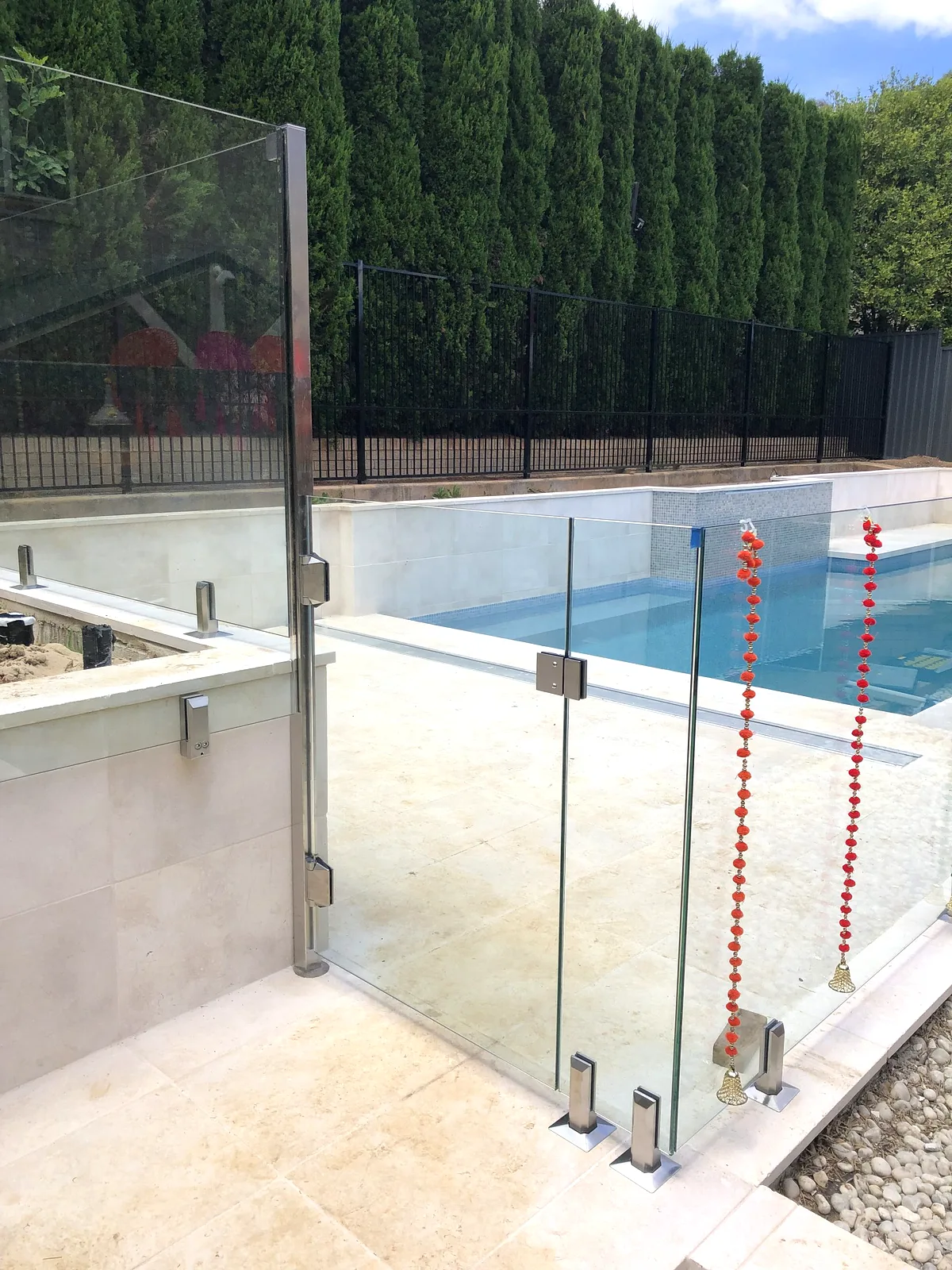
A glass pool fence can only be assessed properly in context. Keep gates self-closing, remove climbable objects, maintain hardware and confirm certification questions with council or an accredited certifier.
Important general-information note
This guide provides general information only. Pool barrier requirements can depend on the age of the pool, the property and the standard that applies. Confirm site-specific requirements with the relevant council or an accredited certifier.
A fencing contractor can assess visible fencing issues and discuss repair or replacement options, but that is different from issuing a compliance certificate. Repairs do not automatically guarantee certification.
Key NSW pool fence measurements
NSW Government guidance states that a pool fence must be at least 1.2 m high, measured from finished ground level. It also states that the bottom gap must not be more than 10 cm, boundary barriers used as part of the pool fence must be 1.8 m high, and gaps between vertical bars must not be more than 10 cm.
These figures are useful starting points, but they are not a substitute for a full inspection. Glass panels, gates, hinges, latches, boundary interfaces, retaining walls and climbable objects can all affect the final assessment.
| Requirement area | General NSW guidance | What to check |
|---|---|---|
| Pool barrier height | At least 1.2 m from finished ground level. | Measure from the correct side and ground level. |
| Bottom gap | No more than 10 cm from finished ground level. | Check paving, soil movement and uneven surfaces. |
| Boundary barrier | 1.8 m high where a boundary fence forms part of the pool barrier. | Confirm which side and standard applies. |
| Vertical gaps | No more than 10 cm between vertical bars. | Glass gaps and gate gaps still need assessment. |
| Horizontal climbable bars | At least 90 cm apart where present. | Remove climbable features near the barrier. |
Pool gates and non-climbable zones
NSW Government guidance says pool gates should swing outwards away from the pool area, close automatically from any open position and self-latch when they close. Gates should not be propped open. A glass gate that drags, drops, sticks or fails to latch needs attention before it becomes a bigger safety concern.
The non-climbable zone is also important. NSW guidance describes a 90 cm non-climbable zone and notes that objects such as trees, shrubs, barbeques, pot plants, toys, ladders and chairs should be kept clear. It also refers to a 30 cm space inside the pool area that should be clear of potential footholds or handholds.
Certification, older pools and owner responsibilities
The Swimming Pools Act 1992 and Swimming Pools Regulation 2018 set out the legal framework for pool barriers in NSW. The legislation recognises that different standards may apply in different circumstances, including older pools and altered barriers.
Owners and occupiers have responsibilities to maintain barriers and keep access securely closed. Councils and accredited certifiers have the certification role. A glass pool fencing contractor can help with practical repairs or replacement, but certification must be handled by the authorised pathway where required.
Common reasons barriers may need attention
- Gate does not self-close or self-latch
- Latch or hinge hardware is loose, worn or misaligned
- Excessive gaps beneath panels or around gates
- Climbable objects are too close to the barrier
- Glass panels, posts or spigots move excessively
- Older fencing no longer suits the current pool area
Planning a Glass Pool Fencing Project in Sydney?
Submit your project details to request a free quote and arrange a site measure for a suitable Greater Sydney project.
Request a Glass Pool Fencing QuoteFrequently asked questions
How high must a pool fence be in NSW?
NSW Government guidance states that a pool fence must be at least 1.2 m high from finished ground level. Boundary barriers used as part of the pool fence have different height guidance.
Do pool gates need to open away from the pool?
NSW Government guidance says pool gates should swing outwards, away from the pool area, and self-close and self-latch.
What is a non-climbable zone?
It is an area around the pool barrier that should be kept clear of objects or features children could use to climb over the fence.
Who can certify a pool fence?
Certification should be handled through the relevant council or an accredited certifier where required.
Can a fencing contractor issue a compliance certificate?
A fencing contractor can discuss repairs or replacement, but certification is a separate role for council or an accredited certifier where required.
Do older pools follow different requirements?
They may. Requirements can depend on the pool age, property and applicable standard, so confirm site-specific obligations with council or an accredited certifier.
Sources
- NSW Government: Owning a pool or spa - your obligationsReviewed 14 June 2026.
- NSW Legislation: Swimming Pools Regulation 2018Reviewed 14 June 2026.
- NSW Legislation: Swimming Pools Act 1992 No 49Reviewed 14 June 2026.
This guide is general information only. It is not legal, certification, building or installation advice. Confirm site-specific pool barrier requirements with the relevant council or an accredited certifier where required.